 AmSpa Connect
 Store
Store
 Customer Portal







 Back to Main Blog
AmSpa Events
The New Growth Engine for Med Spas
By Adam Reinebach, Chief Executive Officer, American Med Spa Association As we close the first quarter of 2026, more people are ...
Read More

Posted By Madilyn Moeller, Thursday, March 26, 2026


By Adam Reinebach, Chief Executive Officer, American Med Spa Association (AmSpa)
For many med spa owners, there’s a moment where the business is clearly working and the opportunity ahead is obvious, but the path to capturing that next layer of growth becomes less clear. They recognize the upside potential but often lack the capital, infrastructure, or playbook to get there on their own.
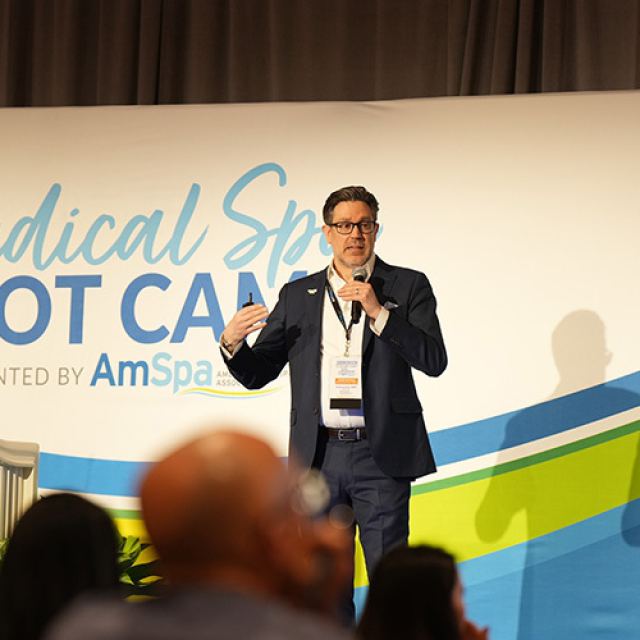
That dynamic is exactly what our Lunch & Learn private equity session on April 10 at our Medical Spa Show in Las Vegas is built to address—giving owners who are evaluating capital, considering a sale, or simply exploring their options a better understanding of how these partnerships actually work in practice.
Despite the expanding presence of private equity in medical aesthetics, it’s common to see a gap between perception and reality. “The biggest misconception is that it’s an exit,” said John Wheeler, CEO of session host Alpha Aesthetics Partners, which operates 31 locations in 12 states. “It’s really a partnership. You’re still building the business, just with more support behind you.”
That distinction matters. While there is liquidity at close, the longer-term value comes from what surrounds the business after the deal—capital to fuel growth, shared infrastructure, and access to capabilities that are difficult to build independently.
“There’s also a belief that you lose control,” Wheeler added. “In a good partnership, you’re still leading your business. What changes is the level of resources around you and the ability to scale faster.”
When you look at outcomes, the dividing line between successful and strained partnerships is rarely financial—it’s often behavioral.
“It comes down to how the founder approaches the partnership,” Wheeler said. “The ones who do well are looking to build something bigger than what they could do on their own. They engage with the platform, adopt best practices, and are open to evolving how they operate.”
That willingness to adapt is what allows founders to fully leverage the platform around them. Without it, even well-structured deals can create friction. “In general, the more a founder leans into the partnership, the more they get out of it,” he said.
Most sellers still anchor on valuation, which is a primary factor but isn’t what determines the long-term success of a PE partnership. Wheeler highlights a more practical set of questions for operators to consider, including:

“Those three questions will give you a much clearer sense of what the partnership will actually feel like,” he said.
Meanwhile, preserving culture is a top concern for sellers—and rightly so. Strong founders build their practices intentionally, hire by hire and patient by patient.
But that foundation can carry forward in the right partnership. “You’re still leading your team, so the culture shouldn’t fundamentally change,” said Wheeler. “There is more accountability, and that can be a new dynamic for some teams.”
When adjustments happen, they’re typically about structure and expectations—not identity. As Wheeler put it, “Teams with strong cultures are what we’re looking for. The focus is on giving those teams more opportunity, more support, and more ways to grow.”
For med spa owners considering their next move, the decision isn’t simply whether to take capital or sell—it’s whether the partnership in front of them aligns with how they want to build the next chapter of their business.

Related Tags
Medical spa news, blogs and updates sent directly to your inbox.
AmSpa Events
By Adam Reinebach, Chief Executive Officer, American Med Spa Association As we close the first quarter of 2026, more people are ...
AmSpa Events
Choosing the right classes at Medical Spa Show 2026 can fast-track your next phase of growth. Whether you just opened ...
AmSpa Events
By Adam Reinebach, Chief Executive Officer, American Med Spa Association (AmSpa)The medspa M&A market remains active and well-capitalized as it ...
AmSpa Events
The first few years of operating a medical spa can be exciting and, at the same time, overwhelming. Nearly half ...