

How a Med Spa Bill Moves Through Your State Legislature
By Madilyn Moeller, Marketing Content Coordinator, American Med Spa Association (AmSpa)
A few lines in a state bill can fundamentally change how you practice. A simple definition change or supervision requirement can affect who can inject, how you structure your ownership, or whether you can offer certain aesthetic services in your med spa.
Understanding the basics of how a bill becomes law helps you stay informed as a business owner and gives you the opportunity to become an active participant when legislation arises that could change the industry. It is about protecting your license, your business, and your patients by knowing when to pay attention and how to make your voice heard.
This guide walks through the state legislative process step by step and shows where medical spa owners and providers can realistically have an impact.
Why Med Spas Need to Understand the Legislative Process
Most of the big shifts you see in your state that impact who can inject, whether NPs and PAs can independently own practices, or how “supervision” is defined, start with a bill in the state legislature.
These med spa bills can:
- Change scope of practice for nurses, NPs, PAs, or aestheticians
- Tighten or loosen rules around delegation and supervision
- Clarify whether the corporate practice of medicine applies to med spas
- Regulate IV hydration, regenerative therapies, or compounding
- Create new licensing or registration requirements for med spas
If you only hear about these bills after they pass, you are stuck reacting. At that point, you may need to change protocols, contracts, and business structures. When you understand the process, you can spot risks earlier, coordinate with professional associations and colleagues, and help legislators understand the real-world impact before they finalize the bill’s wording.
Step 1: Drafting and Introducing a Bill
Every bill starts with an idea, usually a perceived problem that someone wants to fix. The idea might come from a legislator responding to a headline-grabbing injury at a med spa, a medical or nursing board worried about patient safety trends, a coalition of businesses or advocacy groups, or a single constituent with a compelling story.
Legislative staff and legal counsel turn that idea into bill language. Drafting can happen months before the legislative session officially begins.
Once the bill is drafted, a legislator formally introduces the bill at the start of session or during “pre-filing” in some states. It gets a name and number, such Senate Bill 123 (SB 123) or House Bill 456 (HB 456), and is assigned to a committee for review.
Step 2: Committee Referral
After introduction, bills are assigned to a committee, usually based on topic. For med spa related issues, bills are often referred to a Health or Public Health Committee, Professional Regulation or Licensing Committee, or a Business and Professions Committee
The committee chair decides which bills get a hearing and when. If a bill that would impact med spas doesn’t get a hearing or isn’t voted out of the committee, it effectively stalls for that session. Many bills die in committee and never reach a full vote.
Step 3: Committee Hearings and Amendments
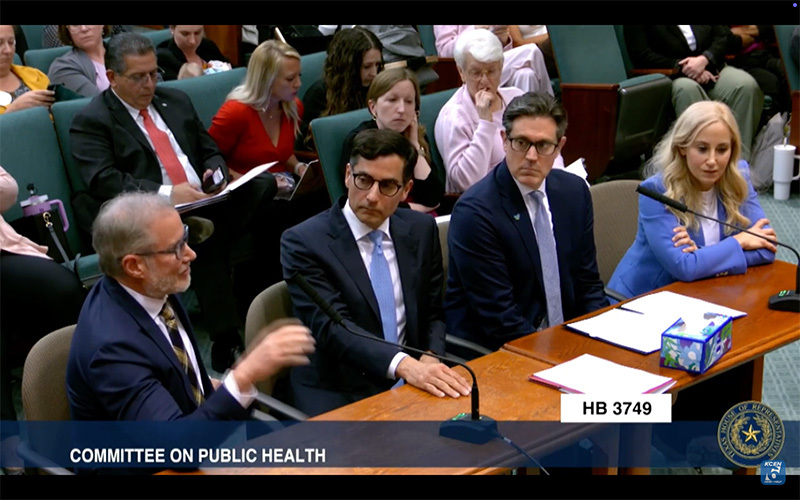
Committee hearings are often the most important phase for shaping a bill. This is where legislators hear from people who support or oppose the proposal. Testimony may come from


- Medical boards and nursing boards.
- Hospital and physician groups.
- Nursing and PA associations.
- Med spa and aesthetic medicine organizations.
- Patient advocates and sometimes individual patients.
- Lobbyists for various stakeholders.
During a hearing there may be oral testimony, which is usually a short statement in support or opposition to the bill, and written testimony, which is a longer and more detailed analysis submitted in writing. Legislators can also ask questions to clarify how the bill would work in practice, how it affects safety, and how it would be enforced.
This stage is where bills are often amended. A bill that started as “regulate IV therapy” can become much more specific: changing who can start IVs, what level of supervision is required, and what equipment needs to be on site.
Learn more about the progression of the 2025 Texas legislation impacting elective IV therapy.
This is usually the best opportunity for med spa owners and aesthetic industry stakeholders to have a hand in shaping the bill. During the hearing phase, you can share real-world explanations to help lawmakers understand the work you do and how compliant practices function. You can:
- Submit concise written testimony explaining how the bill would affect your ability to safely serve patients.
- Suggest practical changes that improve safety but avoid unnecessary burdens.
- Coordinate with colleagues to deliver consistent, patient-focused messages.
Step 4: Floor Debate and Vote, Going Before the Full Chamber
If a bill passes out of committee, it moves to the full chamber, either the House or the Senate. At this stage, the entire chamber can consider the bill. Legislators may propose additional amendments. There is usually a period of debate followed by a vote of all members in that chamber.
Once a bill reaches the floor, party leadership and caucus priorities play a larger role. Lobbying efforts intensify and changes can happen quickly. Sometimes amendments are introduced and adopted right before a vote. When a bill has made it this far, it has momentum and it can be harder to make large, structural changes.
If you are concerned about a bill’s language at this stage, you can still contact your representatives’ offices with a short, clear message about how the bill affects patient access, patient safety, or small businesses in your district. Framing your comments around these larger concerns connects it to state policy goals, not just your own business interests.
Step 5: The Second Chamber: Repeat the Process
In most states, a bill must pass both chambers (House and Senate) in the same form. After a bill passes one chamber, it moves to the other and the process essentially repeats. The second chamber will send the bill to a committee, hold hearings and consider amendments, and then, if it advances, debate and vote on the floor.
Sometimes the second chamber moves faster because the issue is already familiar or they have been working on a similar companion bill. Other times, the second chamber raises concerns or makes substantial changes.
If the two chambers pass different versions of the bill, they must reconcile those differences. Either one chamber agrees to the other’s version as-is, or a conference committee made up of members from both chambers works out a compromise version.
The second chamber can fix problems introduced earlier or introduce new challenges at the last minute.
Step 6: The Governor’s Desk: Signature, Veto, or No Action
Once both chambers pass the same version of the bill, it goes to the governor.
The governor usually has three options:

- Sign the bill: It becomes law.
- Veto the bill: It goes back to the legislature, which may or may not have the votes to override the veto.
- Take no action: In some states, the bill becomes law after a certain number of days even without a signature; in others, inaction can be a “pocket veto.”
The governor’s office can be a last opportunity to raise concerns, especially if patient safety will be harmed by the bill, if the bill conflicts with other state policy goals such as access to care or small business growth, or if the process has been rushed or one-sided.
If a bill is fundamentally harmful and has cleared the legislature, consider providing the governor’s office clear, concise information about how it will affect patients and access to safe, medically supervised aesthetic care. However, a veto is not always the end of a bill; in some states, legislatures can override a governor’s veto with enough votes.
Step 7: After Passage
Once a bill becomes law, your work is not over. In some ways, the practical impact is only beginning. Most bills that affect med spas do not spell out every operational detail in the statute. Instead, they create or amend broad requirements in the law and then direct certain agencies or boards, such as medical, nursing, cosmetology, pharmacy, or health departments, to write specific rules.
Those boards then go through their own rulemaking processes. They draft regulations, publish them for public comment, hold hearings, and then finalize standards that directly affect your day-to-day operations. These rules can set specific training requirements for injectors, establish protocols, define documentation, consent, and follow up standards, and restrict or clarify certain types of advertising.
The statute sets the overall framework, and the boards decide how that framework plays out in actual practice.
After a bill passes, you should:
- Check when it becomes effective—some laws kick in immediately, others months or a year later.
- Watch for notices from the medical and nursing boards about proposed rules connected to the new law.
- Plan time to review and comment on those proposed rules; they may affect your practice even more than the statute did.
How Busy Med Spa Owners Can Realistically Stay Involved
A few habits can help you stay informed without consuming your entire schedule.
First, follow AmSpa’s bill updates. If you prefer to track bills yourself, subscribe to alerts for your state legislature and search for keywords such as “medical spa,” “cosmetic procedure,” “IV hydration,” and “scope of practice.”
Similar bills often appear in multiple states around the same time, so it is worth watching what is happening in your region. AmSpa’s Med Spa Legal Updates provide a state-by-state view of key changes in one place: https://americanmedspa.org/legal-updates.
Second, build relationships with legislators before there is a crisis. Lawmakers are more likely to listen if they have already met you and understand what you do. You can attend a local town hall or coffee chat once or twice a year, introduce yourself as a constituent and as a medical professional providing safe aesthetic care, and offer to be a resource if health care questions arise. When a bill appears that could help or hurt your practice, it is much easier to send a thoughtful email to someone who already knows who you are.
Third, focus on clear, patient-centered messages when you engage. Keep written comments short, ideally one page or less. Emphasize patient safety, access and quality of care. Share specific and practical consequences, such as explaining that a particular requirement would close access to medically supervised aesthetic care or would push patients toward unregulated settings. Clear and grounded input from practicing clinicians stands out.
In Short
You don’t need to memorize every step of the legislative process, but if you intend to be involved in legislation that impacts your business, you do need to understand the key pressure points:
- Bill introduction and committee referral: early signals of what’s coming
- Committee hearings and amendments: your best opportunity to shape the details
- Floor votes and the second chamber: moments to reinforce your concerns with your own legislators
- Governor’s review and board rulemaking: final stages where law becomes day-to-day reality
By recognizing when you can get involved, you can help ensure that new laws and rules protect patients and keep safe, ethical medical spas viable in your state.