Radiofrequency and Non-RF Microneedling Safety: What Patients Should Know
With Molly Muecke, RN, MSN, NP-C
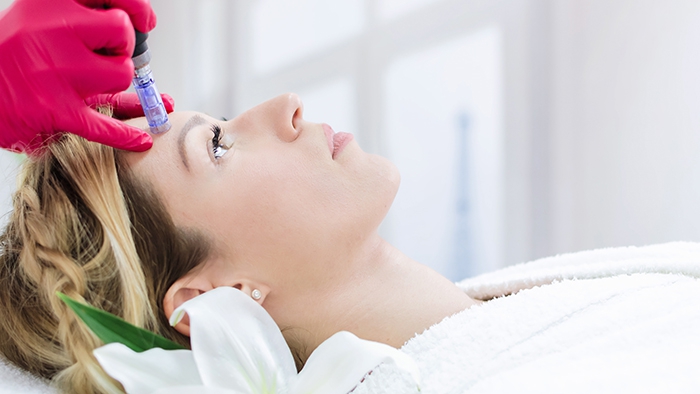
Microneedling is a popular aesthetic treatment offered in 79% of med spas (2024 Medical Spa State of the Industry Report) using a handheld device to create tiny, controlled injuries in the skin. After a microneedling session, the skin begins the healing process and stimulates collagen production, which can help to improve skin tone and texture.
The FDA recently published a consumer alert about RF microneedling, warning the public about potential risks associated with the treatment. How much should patients be concerned about microneedling when performed safely, in the hands of a trained, licensed healthcare practitioner, for an appropriate candidate?
Molly Muecke, RN, MSN, NP-C, of Astra Aesthetics, shares her insight on the safety of non-ablative resurfacing and how med spas keep patients safe when performing these energy device treatments.
Learn more about med spa treatment safety, including botulinum toxins, dermal filler, PRP/PRF, IV therapy, and more in How Safe Are the Top Med Spa Treatments?
How safe is radiofrequency (RF) microneedling? How safe is non-RF microneedling?
Molly Muecke: As clinicians our goal is to strategically injure skin to encourage the body to produce new, healthier, and more aesthetically pleasing tissue with less texture, laxity, and volume loss. With that in mind, what sets apart medical aesthetic treatments? Treatment depth. Any treatment that permeates the tissue beyond the stratum corneum, the most superficial layer of the skin, is addressing living tissue. At this depth comes the ability to create incredible results, but also opens the door to significant harm if treatments are performed incorrectly. Both RF and non-RF microneedling procedures are very safe when performed by skilled, trained, providers.


What do med spas do to keep patients safe for RF microneedling? For non-RF microneedling?
Muecke: There are two realms of safety precautions a medical spa facility must address in order to achieve best outcomes for the patient. The first is a thorough consultation prior to procedure performance. This is done to establish if the patient is a good candidate for the procedure. These considerations may include history of keloids, chronic skin conditions, use of topicals and oral medications, prescribed and over the counter. Lifestyle factors such as sun exposure, upcoming events, and any planned travel should also be evaluated to establish if the patient has the capacity to appropriately heal.
Secondly, device specific training is crucial for safety. A common belief with lasers and devices, “deeper is safer” does not always apply with any form of microneedling due to the nature that skin on the face is thin. Deeper settings should be reserved for scar tissue. High energy is not always better, especially when performed deep, as it will dissolve fat and potentially results in scar formation. It is incredibly important to know your devices’ parameters and how to wield them in order to accomplish desired outcomes in a safe environment.
How do providers safely perform microneedling? Do providers need specialized training to perform microneedling?
Muecke: Device specific training is extremely important in all aesthetic procedures but especially for RF treatments because setting parameters are not interchangeable between devices. Basic non-RF microneedling has more flexibility between device training overlap but it is still very important to have a good grasp on your device and how to use it before addressing a patient.
There are two basic considerations when performing all microneedlings. Blood can be your friend when establishing depth. One or two pinpoint spots indicates you are at the proper depth. Profuse bleeding correlates to being too deep and red blood cells are incredibly inflammatory resulting in longer patient recovery. However, this is less reliable with RF treatments because RF coagulates blood on contact.
Secondly, be very sure to not press the microneedling device into the face yourself. If you do this, you have no idea what depth you are truly working at and can cause considerable harm. Let the devices do the work for you within their depth setting.
What post-treatment downtime and aftercare is expected following a treatment that has been performed safely?
Muecke: Due to the coagulation that occurs with RF microneedling, this tends to have less downtime than traditional microneedling, even though it is technically a more aggressive procedure. The less the patient bleeds, the less they are inflamed, resulting in little to no downtime for RF microneedling. My patients typically are a little pink when they leave and back to baseline the following day. Non-RF microneedling has more downtime because it does not have RF contact coagulation. This results in a red to pink appearance that improves over 3-5 days.

Aftercare is similar for both. Avoid makeup for 1 day, retinols/acids/vitamin C for two weeks, sun for 1 month. Apply growth factors starting day of and post procedure safe SPF starting the following day.
If performed in a series, the following treatments should be performed in 4-6 weeks for best results based on the bell-shaped curve of skin healing.
How do you recommend patients find safe providers for this treatment?
Muecke: In some aspects, medical aesthetics is still the Wild West of medicine because there is no standardized education for aesthetic providers. With that said, I recommend patients researching not only the office, patient photos, and devices offered; but also the medical providers themselves in where did they train, and how many years practiced in aesthetic medicine. Like any profession, time spent in the field tends to lean toward more expertise in certain areas but not always if clinicians are not keeping up to date with best practices. On the opposite side of the spectrum, newer providers to aesthetic medicine can produce very good outcomes because their skills tend to be the most up to date. Ultimately, research is key when picking safe providers.
Molly Muecke, RN, MSN, NP-C, is a board-certified nurse practitioner from Knoxville, Tennessee. She received her Bachelor of Science in Nursing from the University of Tennessee and continued her education obtaining her Master of Science in Nursing from Case Western Reserve University. Once she completed her graduate education, Muecke accepted a Vanderbilt Medical School faculty position practicing in orthopedic spine surgery for Vanderbilt Medical Center. She then transitioned her practice to aesthetic dermatology in Nashville and plastic surgery in Knoxville. Muecke founded Astra Aesthetics with the goal of accessible aesthetic medicine for all. She has an eye for detail and believes in the art of aging gracefully through scientifically proven surgical and aesthetic procedures.
Disclaimer: The information and answers contained in this section provide a general guide to services that are offered by “medical spas”. The information contained on this site is for general reference only. This information is not intended to provide medical or legal advice, and it should not be relied upon as medical or legal advice. This information is not intended to create, and receipt of it does not constitute, a practitioner-patient or attorney-client relationship. Readers: You should not act upon this information without seeking a knowledgeable healthcare provider or legal counsel that takes your individual medical history and jurisdiction into account. All uses of the content of this site, other than personal uses, are prohibited.
Clinically reviewed by Taylor Siemens, NP-C, Kairos Aesthetic Medicine.